Barefoot Kids, Colored Belts, Dragon Logo — They All Look the Same. They’re Not.
If you’re looking for a martial arts school for your child in Longmont — or anywhere in Northern Colorado — you’ve probably already noticed something: from the outside, they all look nearly identical.
That assumption is one of the most common and costly mistakes parents make when trying to choose a martial arts school.
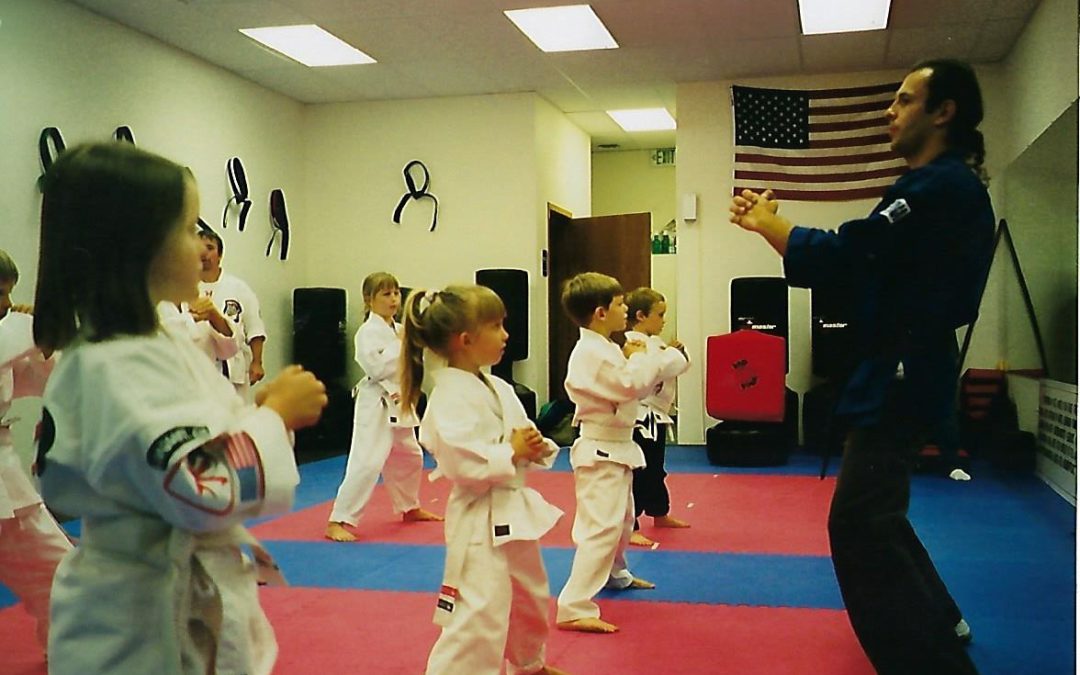
- Bare feet on the mat.
- Uniforms that people politely call “pajamas.”
- Colored belts. Bowing.
- A dragon or tiger logo somewhere near the door.
It’s easy to assume they’re all fundamentally the same — that one is as good as the next.
That assumption is one of the most common and costly mistakes parents make.
Is a Community College the Same as Harvard?
Both have students, teachers, and books. Both grant degrees.
By the surface-level logic of “they all look the same,” they should be equivalent.
They aren’t — and everyone knows it.
Martial arts schools are no different. The outward trappings overlap.
BUT, what is actually taught — the philosophy, the curriculum, the standards, the culture — varies enormously from school to school, and sometimes from instructor to instructor within the same school.
What Schools Are Actually Teaching
Martial arts is an extraordinarily broad term. It applies to virtually any training in combat, competition, performance, or the appearance of them.
Within that umbrella, schools can be focused on wildly different things:
- competitive tournament fighting,
- cage and MMA competition,
- eastern culture and tradition,
- character development,
- personal safety,
- military and law enforcement combatives,
- or some combination of these.
Some of those focuses are appropriate for children.
Others are not.
A school preparing students for cage fighting is a fundamentally different institution than a school focused on character development and self-mastery — even if they both have kids in white uniforms bowing to each other.
The Questions to Ask Before You Enroll
Ask any school you’re considering: what is your curriculum, and why do you teach it?
A school with a clear mission will answer that clearly.
A school without one will either deflect or give you a vague non-answer about “discipline and respect.”
Ask them to map out your child’s learning path — what they will learn at each level, what is expected of them, and what kind of person they will be becoming along the way.
If a school can’t show you that path, they don’t have one.
The biggest mistake is not choosing the wrong art, it’s choosing a school whose focus and values don’t match what you want for your child — and not finding out until months of time and money have been spent.
Responsibility for Power
The physical techniques taught in martial arts schools varies widely, and in recent years the most popular moves have been breaking joints and choking people into unconsciousness.
Many schools promote and teach these moves to children without regard to the likely consequences, serious injuries, and whether children can be held responsible for such injuries.
Schools teach such debilitating moves to children solely because they have been popularized on TV fights and in adult classes, so schools feel they must teach this type of curriculum to attract young students.
Such techniques are dangerous and potentially lethal for adults, and much more so for children.
Ultimately, it may be up to you to decide whether your child is ready to be responsible knowing such dangerous martial arts techniques because schools across the country see no conflict in teaching them to young children.
Concussions Aren’t Just for Football
Traumatic Brain Injury (TBI) rose into public consciousness through its prevalence in the National Football League (NFL), but concussions can occur in any physical activity that includes blows to the head.
Martial arts classes where kids are geared up and taught to knock each other out with repeated punches and kicks to the head, coupled with choking each other out are candidates for TBI.
Be aware.
What Should Children Learn?
I have been derided online after I stated that “I could teach these dangerous techniques to young students, but I choose not to”; my 8-year old doesn’t need the power to take a human life. Such critics fail to appreciate the many effective alternative self-defense lessons children can learn instead.
As a professional martial arts teacher and fellow parent, I can tell you that there is a way to teach children foundational martial arts skills, more than enough skills to protect themselves, without learning such extreme and debilitating moves.
I know because I do it and my students have reported their successes to me.
Later, as students age and mature, it’s simple to introduce these techniques into their training.
A gun can be taken away from a child, but deadly martial arts skills cannot; an 8-year does not need to know to choke another child into unconsciousness, while a child successfully choking out a grown man are only seen in martial arts demonstrations.
Stun-and-run is a much better strategy for a child against an adult.
A martial arts curriculum should not only contain skills, but wisdom from an experienced teaching with a solid moral foundation regarding the lessons.
Don’t settle.
What SMAA Is Actually Teaching
At Scornavacco Martial Arts Academy, our curriculum focus is character development and self-mastery through martial arts excellence. We’ve been teaching students in Longmont, Colorado since 1998.
Every technique, every belt, every class is in service of that mission. We can show you exactly what your child will learn, in what order, and why — from their first day through Black Belt and beyond.
We are not a gym with a belt system. We are not a tournament factory. We are an academy — in the truest sense of that word.
Also worth reading: A Black Belt Doesn’t Mean Someone Can Teach. Here’s What to Look for Instead.
Scornavacco Martial Arts Academy — Longmont, CO
Come See the Curriculum. Ask Every Question.
Schedule an Evening with the Master — a private, no-pressure introduction to SMAA designed around your child’s specific needs.
Scornavacco Martial Arts Academy · 1830 Boston Ave, Suite F, Longmont, CO · (303) 485-5425